

Types of Drugs
Stimulants
Description: Increase activity in the central nervous system, leading to heightened alertness, energy, and heart rate.
Examples: Amphetamines, cocaine, and caffeine
Depressants
Description: Slow down the central nervous system, promoting relaxation and reducing anxiety.
Examples: Alcohol, benzodiazepines, and barbiturates
Opioids
Description: Powerful pain-relieving substances that can also produce feelings of euphoria. Opioids carry a high risk of dependence and addiction.
Examples: Morphine, oxycodone, fentanyl, and heroin
Opioids are a class of drugs that include heroin, synthetic opioids such as fentanyl, and prescription pain relievers (see below). All opioids are chemically related and interact with opioid receptors on nerve cells in the body and brain. Opioid pain relievers are generally safe when taken for a short time and as prescribed by a doctor, but because they produce euphoria in addiction to pain relief, they can be misused.
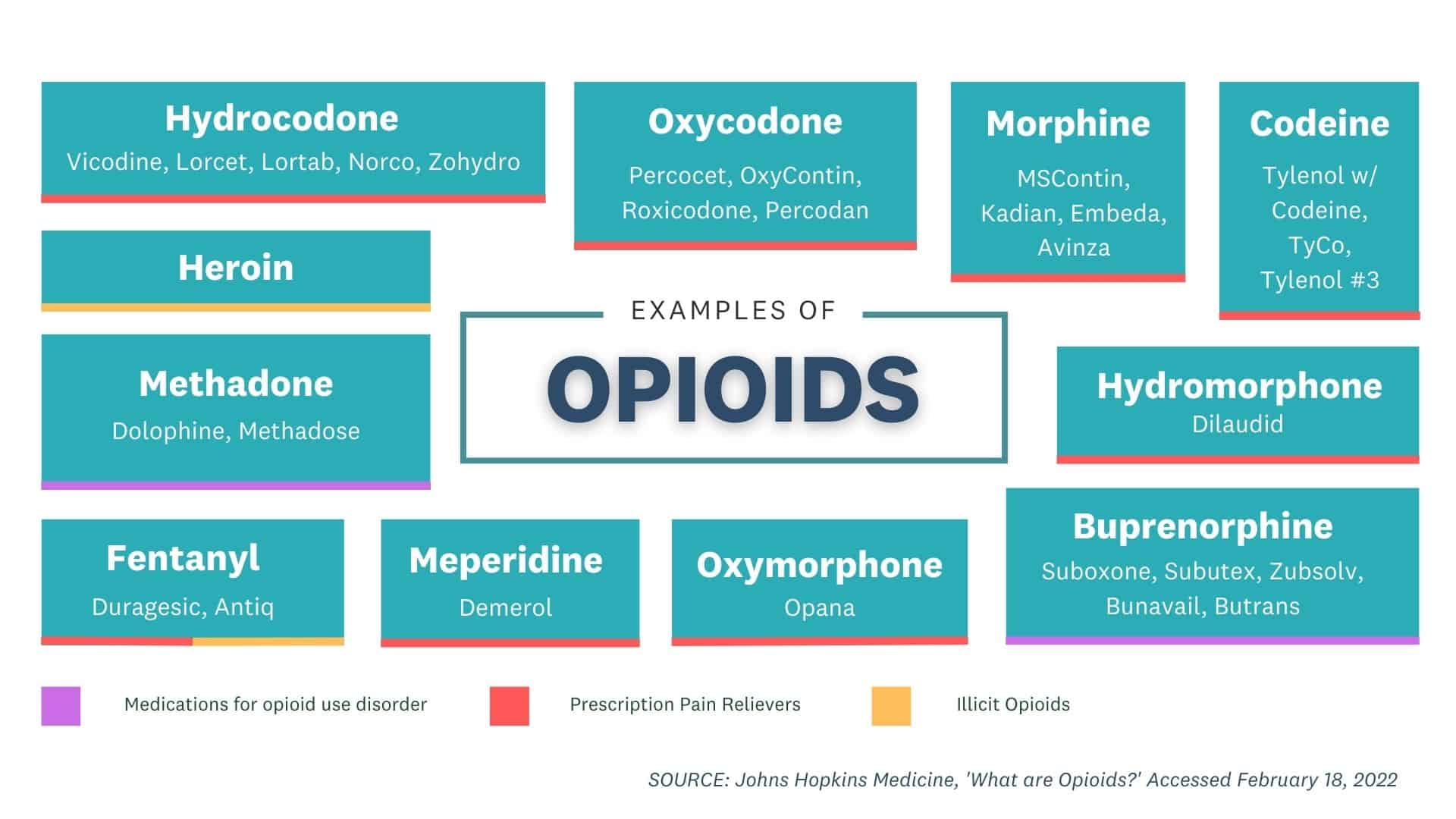

Fentanyl
Fentanyl is typically 50-100x stronger than morphine—designed and approved for cancer and later-in-life harm, overdose, and death in the U.S are linked to illegally manufactured and non-prescribed fentanyl.
Fentanyl test strips can detect the presence of fentanyl. However, it is important to know that a negative result does not mean there is no fentanyl present.

The high potency of fentanyl greatly increases risk of overdose, especially if a person who uses drugs is unaware that a powder or pill contains it. They can underestimate the dose of opioids they are taking, resulting in overdose.
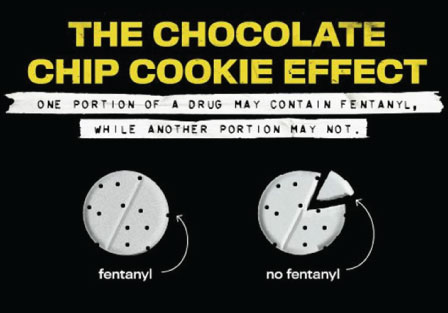
Illegal fentanyl is being mixed with other drugs, such as cocaine, heroin, methamphetamine, and MDMA. This is especially dangerous because people are often unaware that fentanyl has been added.
For example, fentanyl may exist in an untested area of a pill, or the pill may contain a different synthetic opioid product (See the image of the Chocolate Chip Cookie Effect).
Xylazine
Xylazine is a non-opioid sedative that is approved by FDA for animal use, but not for people. Xylazine is increasingly added to other drugs such as cocaine, heroin, or fentanyl to enhance the effect or increase street value. Xylazine is dangerous because it can depress breathing, blood pressure, heart rate and body temperature to critical levels and, in combination with fentanyl, can make overdose reversal challenging.
Nitazenes
Nitazenes is a synthetic opioid with 40 times more power than fentanyl. It is also called “gas station heroin.” People may not be aware that they have taken nitazenes, as they may be added to other substances, including fentanyl, heroin, and benzodiazepines. Like all opioids, Nitazenes can slow breathing, blood pressure, and heart rate to dangerously low levels, potentially contributing to overdose. (NIDA).
Hallucinogens
Description: Increase activity in the central nervous system, leading to heightened alertness, energy, and heart rate.
Examples: Amphetamines, cocaine, and caffeine
Cannabis
Description: Can produce both depressant and hallucinogenic effects, affecting mood, perception, and coordination.
Examples: THC (tetrahydrocannabinol) and CBD (cannabidiol)
Inhalants
Description: Volatile substances that produce mind-altering effects when inhaled. Many are commonly found in household products.
Examples: Glue, paint thinners, aerosols, and nitrous oxide
Synthetic and Club Drugs
Description: Often unregulated substances associated with party or club settings and may have unpredictable effects.
Examples: MDMA (Ecstasy), ketamine, synthetic cannabinoids, and synthetic cathinones (“bath salts”)
counseling & psychological services
ADDRESS
2nd Floor, Gove Student Health Services
107 Gray Drive, Greensboro, NC 27412
PHONE
336.334.5874
quick links
social media

@uncg_counselingservices